
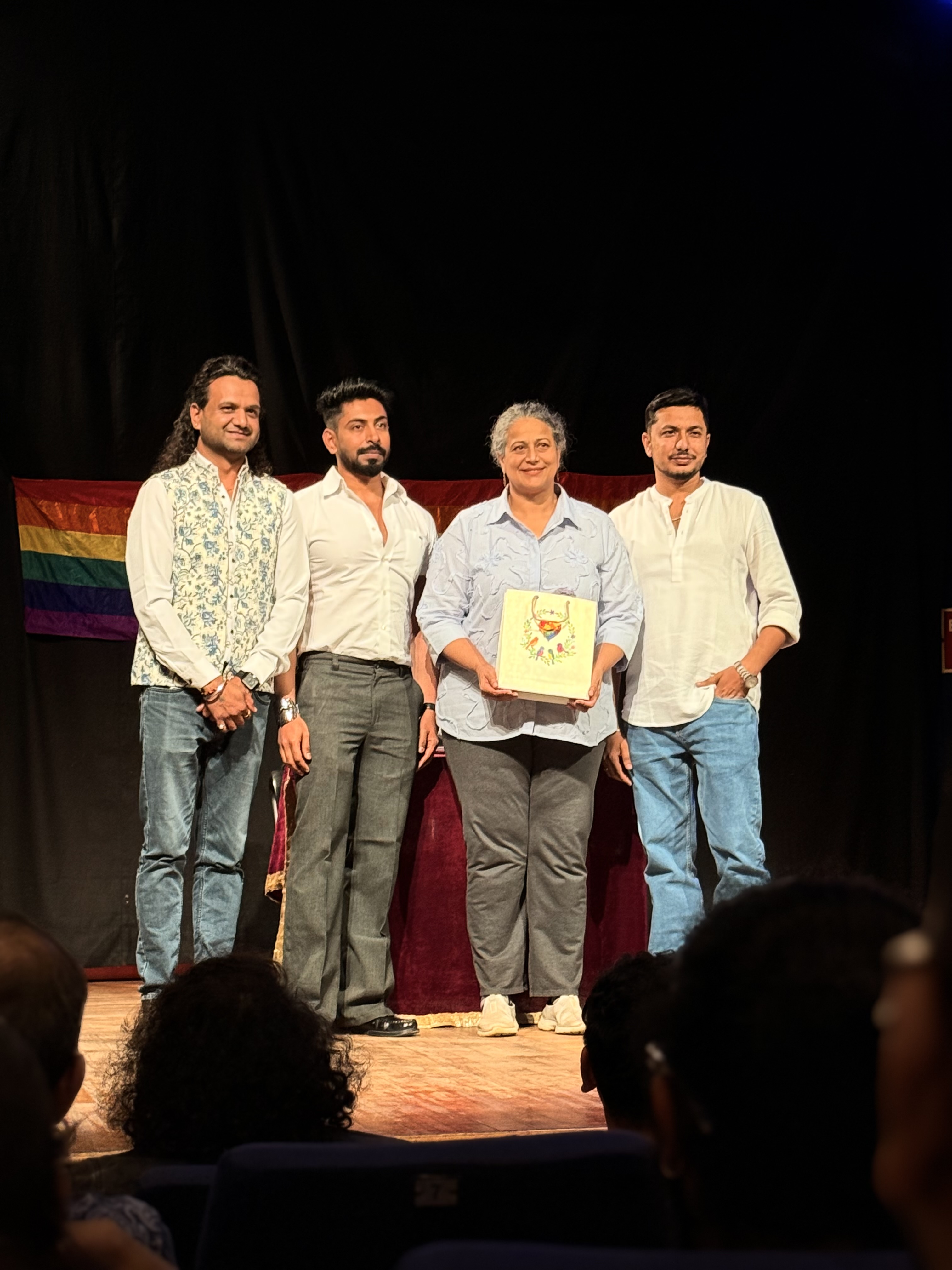
Last evening, at Lok Kala Manch, I revisited a younger version of myself.
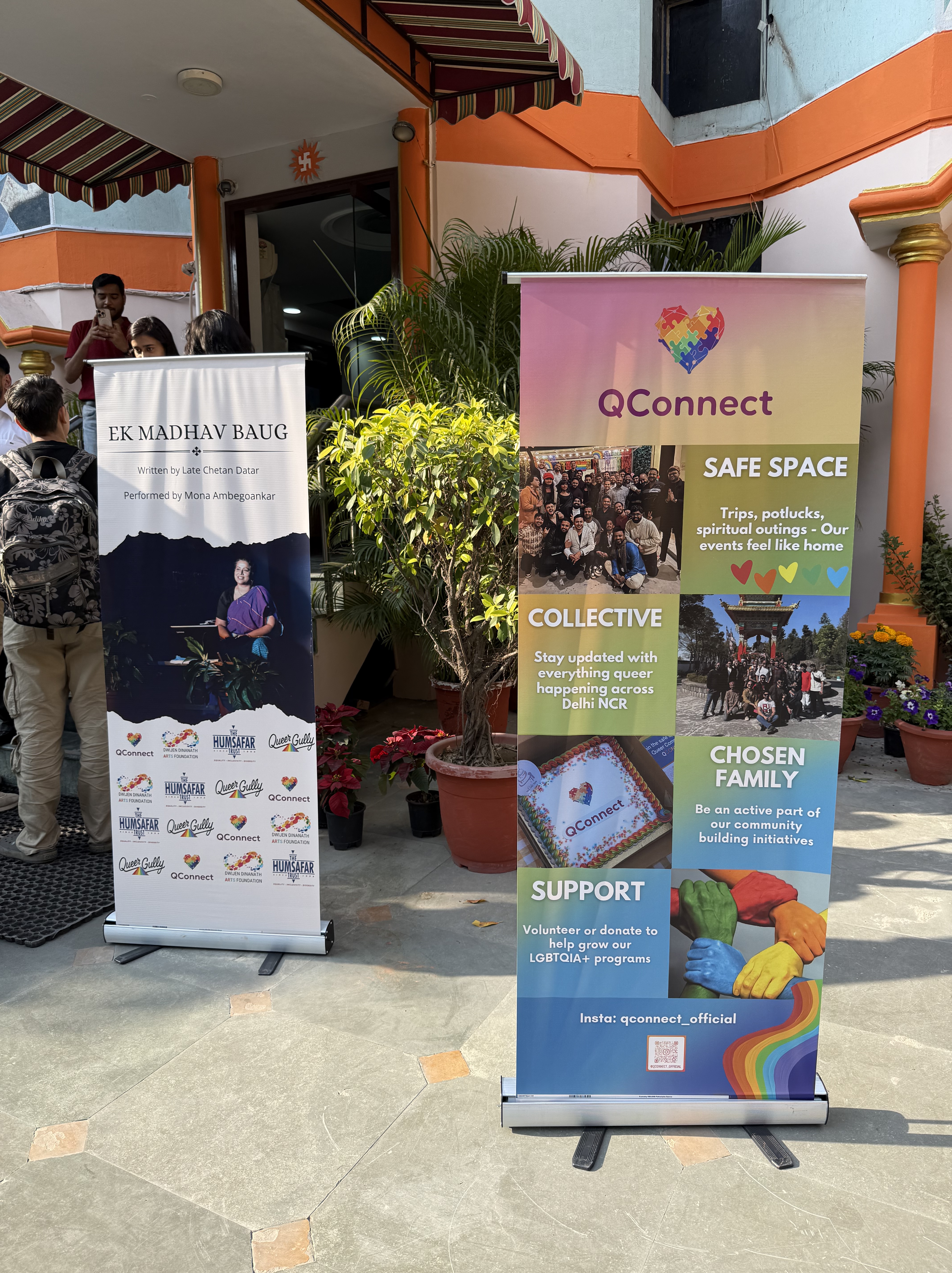
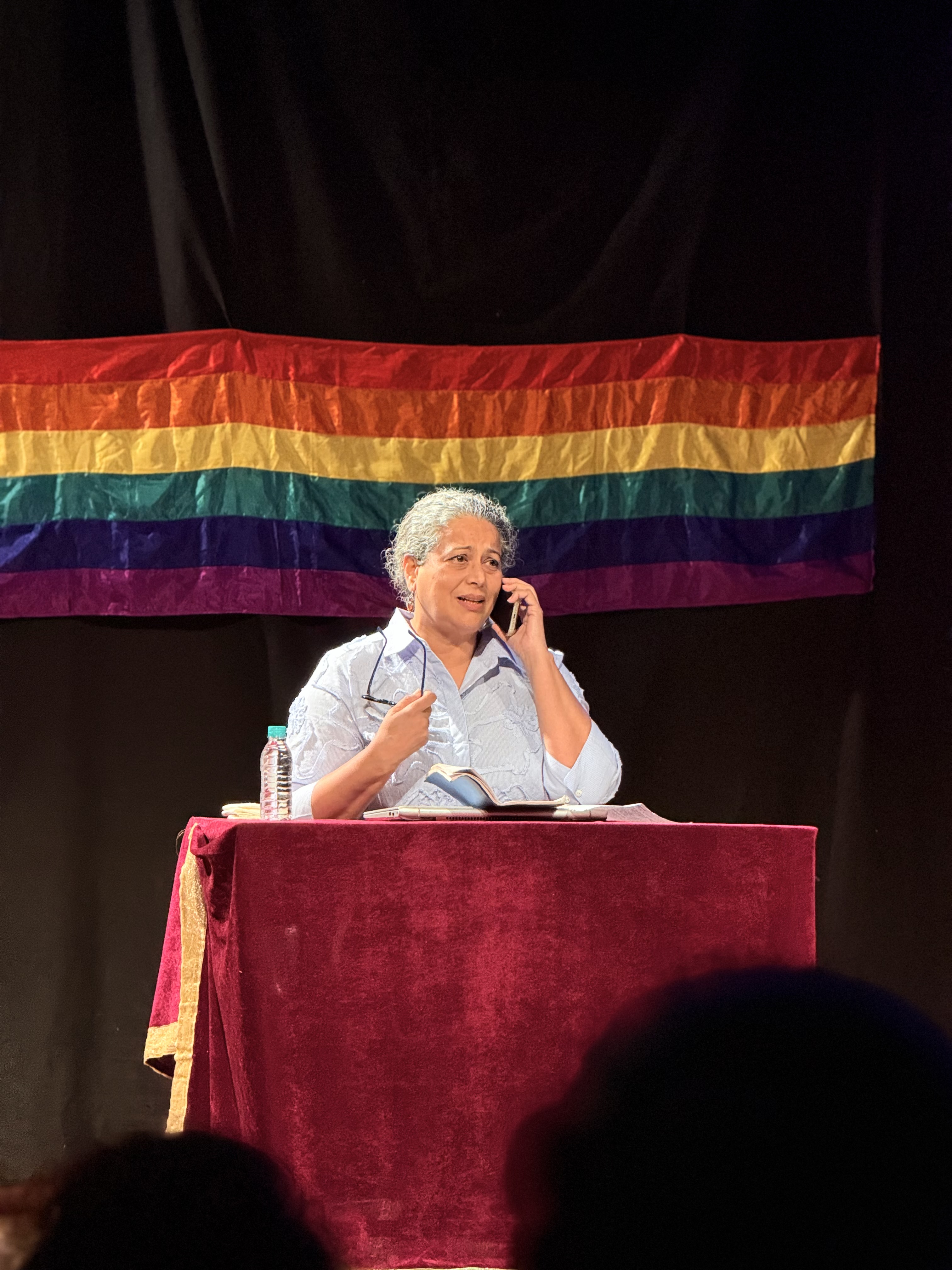
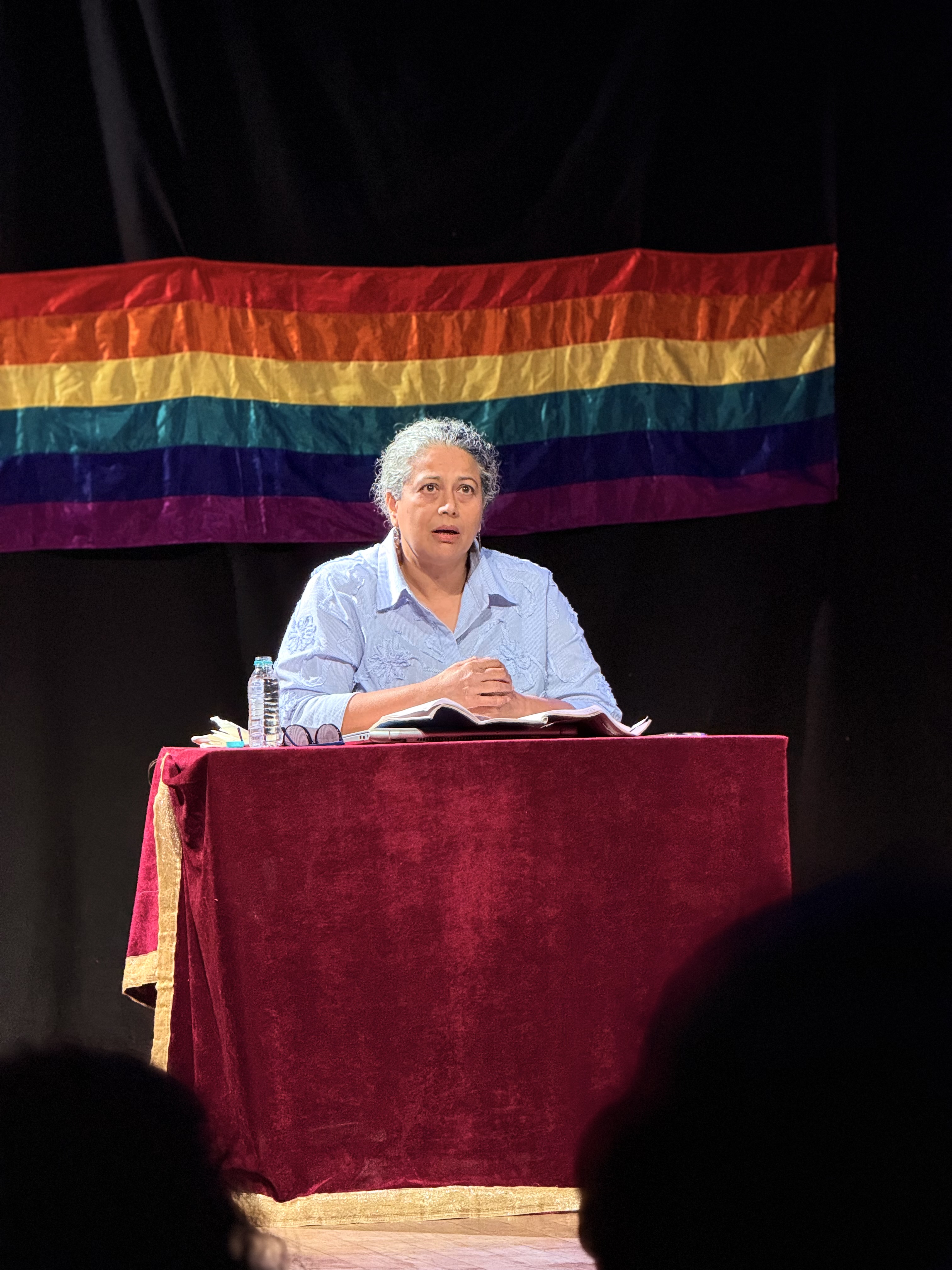
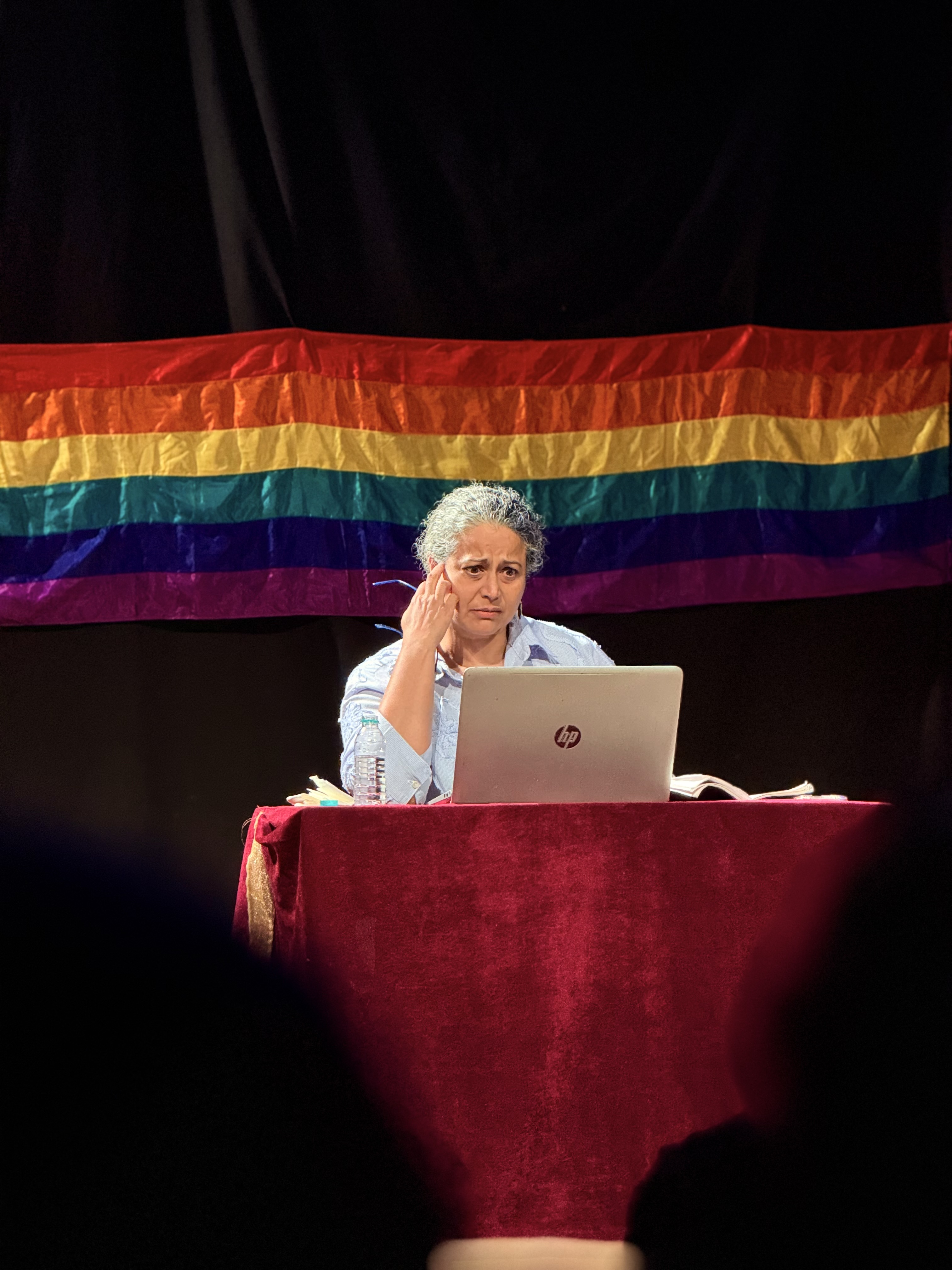
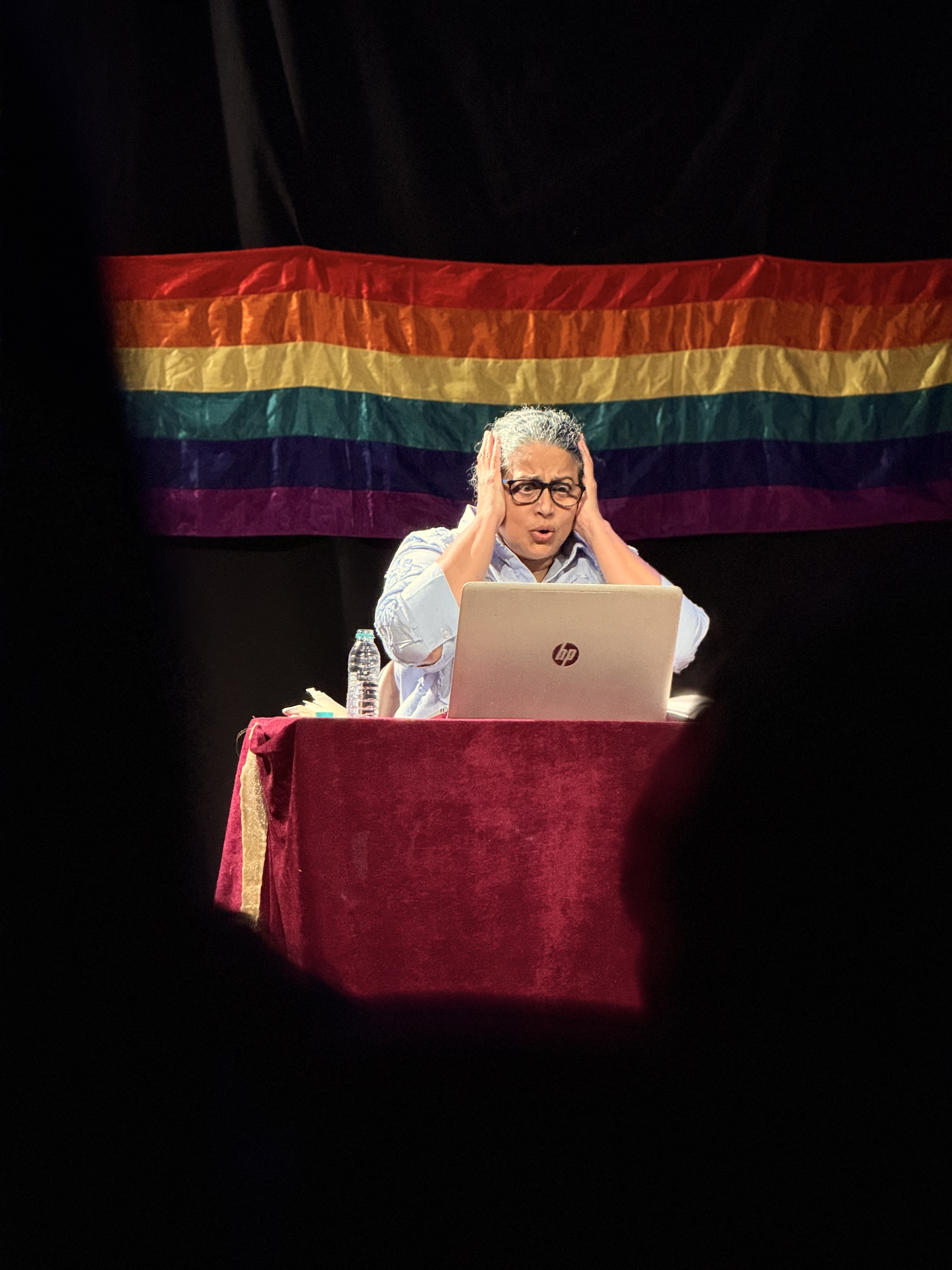
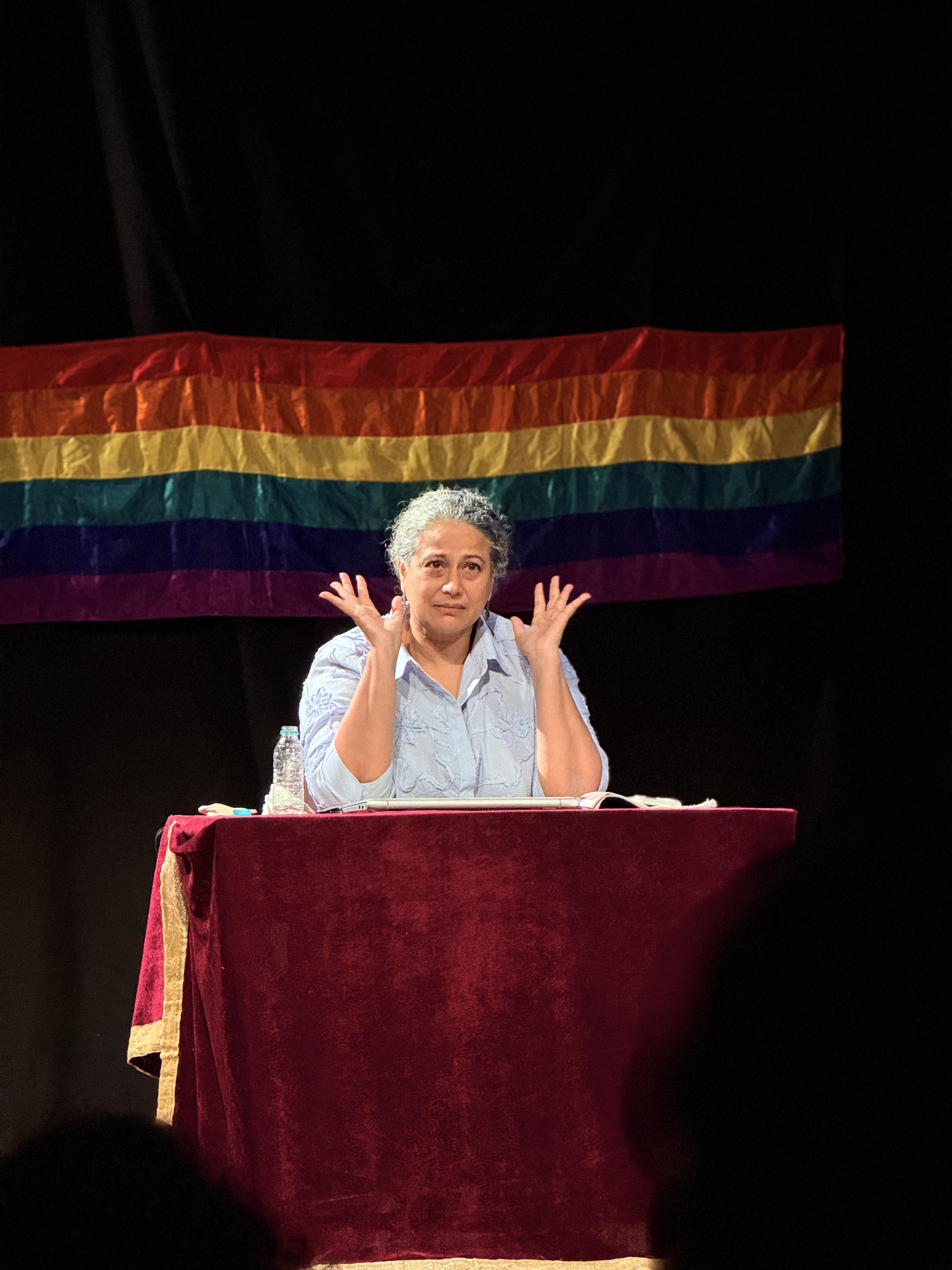
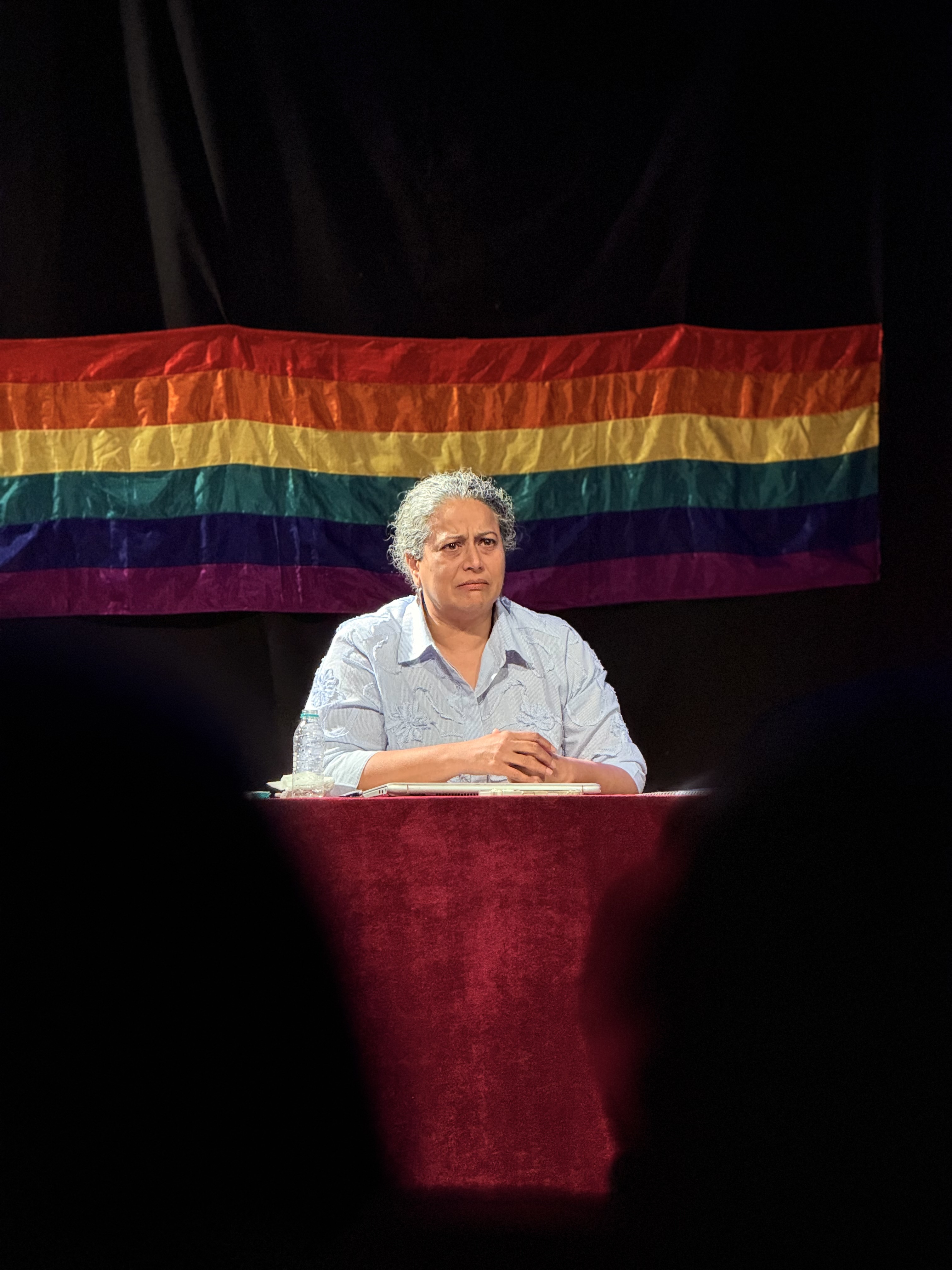
The play was “EK MADHAV BAUG”, written by the late Chetan Datar and organised by the Delhi-based queer collective “QConnect”. On stage stood Mona Ambegaonkar – alone, luminous, carrying an entire universe in her pauses.
Eleven years ago, I watched the same play sitting cross-legged on the floor, leaning quietly against my then partner. I remember how still we both were. At some point, I realised my eyes were overflowing, and I wasn’t even trying to stop the tears. It wasn’t dramatic. It wasn’t loud. It was simply overwhelming.
I remember feeling seen in a way I had never felt before – as if someone had taken the confusion, the fear, the longing I carried within me and placed it gently on stage. I wasn’t hiding. I wasn’t explaining myself. I was just… feeling.
It was an emotional and deeply vulnerable moment. Not because of where I was sitting or who I was sitting with – but because, for the first time, I allowed myself to fully experience my own truth without resistance.
Around the same time, my sister watched the play at a queer film and theatre festival. Right after the show, she hugged me tightly – a hug that held apology, understanding, grief, and pride all at once. She did not say much. She did not need to. Her acceptance was pronounced, yet unsaid. It was the kind of acceptance that does not arrive with slogans but with softened eyes.
That is the power of this story.
India was different then.
The world was different then.
I was different then.
Back then, the love we carried felt fragile – like contraband. Something to be hidden, protected, and negotiated. Watching the play yesterday, I realised that while laws change and parades get louder, the inner journey of acceptance – ours and our families’ – still moves at a deeply human pace.
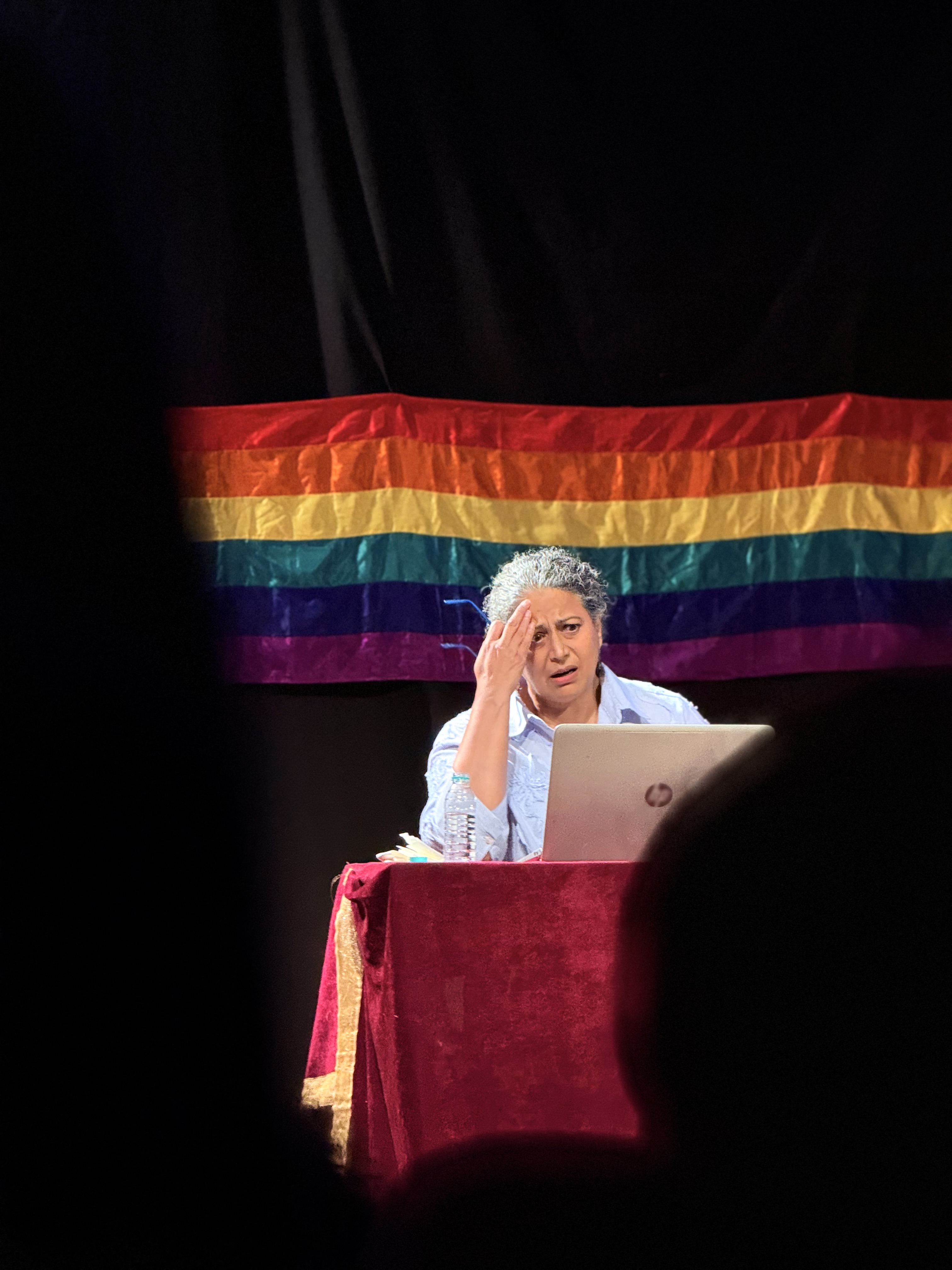
“EK MADHAV BAUG” is way ahead of its time. It does not shout. It does not preach. It unfolds in layers – a staccato mono act that moves like memory itself. Just when you begin to settle into one emotion, it gently pulls you elsewhere. Laughter dissolves into ache. Tenderness collides with denial. Silence becomes louder than dialogue.
And Mona ji… the way she inhabits each breath – you forget it is a performance. It feels like a confession. It feels as if a mother has opened her chest and invited you to sit inside her heartbeat.
The event ended the way honest art often does – with tears. With conversations. With strangers looking at each other a little more knowingly. There were discussions, yes. But more than that, some emotions did not need vocabulary.
As someone who has spent nearly two decades in advertising – a world obsessed with packaging emotions into thirty seconds – I am always in awe of theatre that refuses to be packaged. This play does not simplify queer existence. It does not sanitise it for comfort. It allows discomfort. It allows contradiction. It allows truth.
And truth, when spoken gently, travels across generations.
From me, eleven years ago, clinging to a love I feared losing – I had lived many of the moments portrayed in that play.
To my loved ones today, holding me in a love that no longer needs explanation.
Art did that. A story did that.
While the play is in Hindi, I truly wish it travels beyond metro cities – beyond even the world stage – to every little town in the country. Because while the setting may be local, the emotions are universal. Every culture understands longing. Every family understands denial. Every heart understands love that wants to be seen.
Some stories are not just performed.
They are lived.
And sometimes, if we are lucky, they help us live a little more freely.
Last night, at Lok Kala Manch, I did not just watch a play.
I witnessed how far we have come.
And how much further love can still take us.
 ANKUR MONDAL